edger477 wrote: Fri May 19, 2023 8:07 am
The main difference will be in the impendance that amp sees, and therefore in the transformer input current. Normally the amount of power the amps produce is inversely proportionate to the load connected, so doubling the resistance means halving the power. It is good for making more use of volume pots if your signal becomes too strong early (on low volume).
Interesting, thanks!
edger477 wrote: Fri May 19, 2023 8:07 am
Also, if you have serial resistor, and then use 8 Ohms or more resistance, check if total resistance is within amp specs, many say that load is 4-8 or 4-16Ohms, so you'd have to remove serial resistor to use those.
I don't think I have to remove it: For hifi systems it's safe to use speakers with a higher resistance than the amp specifies. But if I want to keep the amp cooler and/or get more power to the electrodes, it's proabaly a good idea.
edger477 wrote: Fri May 19, 2023 8:07 am
The secondary difference might or might not be different internal resistance of the output windings. I know that each of output taps on my transformer has different static resistance and I use the lowest power / highest resistance one (1.25w or whatever is lowest) since there is several hundred Ohms of internal resistance there that is helpful as buffer when surface area changes, you accidentally short the electrodes etc, it is basically good match for the load of human body that is connected.
Also good to know. Using the lowest power / highest resistance tap on my transfomer somehow did not feel as good as the 10W tap I used previously. But that might be perceptive and depending on the situation, mood, etc. I'll have to do more testing!
edger477 wrote: Fri May 19, 2023 8:07 am
Also, if you have serial resistor, and then use 8 Ohms or more resistance, check if total resistance is within amp specs, many say that load is 4-8 or 4-16Ohms, so you'd have to remove serial resistor to use those.
I don't think I have to remove it: For hifi systems it's safe to use speakers with a higher resistance than the amp specifies. But if I want to keep the amp cooler and/or get more power to the electrodes, it's proabaly a good idea.
With valve amplifiers impedance matching was extremely important; with solid state analog amplifiers as long as you don't go under the minimum impedance it's fine. I'm not sure about Class D amplifiers, but I'm pretty sure the only thing an additional series wire would resistor will do is act as an additional inductance and reduce the switching noise, while dissipating a significant portion of the amplifier's output power.
I have parts for this on order and intend to visualize the waveforms with a scope before using the rig for its intended purpose because I really do want to have an idea of the voltages and currents involved here. My LCR meter shows that, with conductive lube on my fingers and probe tips pressed between thumb and forefinger, I get an AC impedance of about 2.7K @ 1KHz and a DC resistance of about 200K. I figure a couple 1.5K 5W resistors in series across the 0.63W windings should give us a reasonable idea of the actual voltages involved.
By the way, remember we're using these transformers in reverse. A 2.7K impedance across a nominal 8K winding (which is typical for a 0.63W 70V primary) would reflect an impedance of 2.7 ohms on the other coil, so probably best to keep those power resistors in there. Of course I intend to do my testing with the other taps as well.
Hi everyone, after reading through every post multiple times, I'm trying to build my box. Have had a dg labs coyote for the last few months, but just feel like I'm missing out on so much especially with all the triphase files out there, so here I am. Have some very limited experience with soldering and assembling electronics so I have a couple of questions. Followed the USA parts list Bobhill (thanks Bob!) posted on pg17 for reference, besides switching to 20 awg wire.
1) For these resistors (in attached picture), would I just solder a wire just through 1 end? For example where I circled in red, for the green wire, I solder just on one end of the resistor, and the black wire goes through the other side of the resistor? So basically the green wire goes from the board, passes through one end of the resistor and then continues on to transformer, and same thing for the black wire on the other side of the same resistor.
2) Once built, what is the safest way to test it's safe in ELI5 terms? In case it wasn't apparent, I'm not too familiar with the technical terminology, so some of the other posts discussing this have left me feeling a bit lost which is especially concerning when testing safety. I do have a multimeter, the same one that was included in the USA parts list.
Thank you!
Attachments
Screenshot_20230702_141309_Firefox.jpg (154.79 KiB) Viewed 9745 times
The "Thanks Bob!" made me chuckle; until recently that was part of a meme among flerf debunkers like SciManDan. (Dan has since retired the meme after Bob Knodel's passing.)
First of all, most people seem to have best results using the 8 ohm and 0.63W taps on those 70V line transformers. I wish I could explain the reason for this in non-technical terms, but it has to do with turns ratios on the transformer and the voltage delivered at the output. Using the 8 ohm tap allows the transformer to handle more power from the amplifier, and the 0.63W tap steps the voltage up to where it will reliably cause the nerve depolarization necessary for the e-stim effect with low current. If the voltage is too low, you'll need more current to get any sensation and will have a greater risk of literally cooking your flesh.
In terms of mains electrical safety, the main concern is that there isn't a direct path between the power supply primary and secondary. If there is, mains voltage can easily find a path to ground through you and you will have a bad time.
I'd like to address the fan noise issue. If you're comfortable with soldering and have a spare 7809 lying about, try putting that between the power supply and the fan. The fan will run a little slower but should still provide more than enough airflow. The regulator will completely decouple the fan from the amplifier.
DefinitelyHere wrote: Sun Jul 02, 2023 9:38 pm
1) For these resistors (in attached picture), would I just solder a wire just through 1 end? For example where I circled in red, for the green wire, I solder just on one end of the resistor, and the black wire goes through the other side of the resistor? So basically the green wire goes from the board, passes through one end of the resistor and then continues on to transformer, and same thing for the black wire on the other side of the same resistor.
Correct.
DefinitelyHere wrote: Sun Jul 02, 2023 9:38 pm
2) Once built, what is the safest way to test it's safe in ELI5 terms? In case it wasn't apparent, I'm not too familiar with the technical terminology, so some of the other posts discussing this have left me feeling a bit lost which is especially concerning when testing safety. I do have a multimeter, the same one that was included in the USA parts list.
I tested the box with a steady signal (e.g. sine wave of 440 Hz). After some initial measurements with the multimeter (voltage and current without load) I tested my box on my leg: I turned down the power of the box all the way and held the electrodes to my leg maybe one inch apart (use conductive gel on skin, make sure your fingers don't touch the electrodes). Then I slowly increased the power until I noticed some tingling. That way I determined if it's working at all and I got a feeling for the box and its power. If it was too strong I could just pull away the electrodes. And if something went seriously wrong I would "only" burn the skin on my leg and the current should not reach my heart.
Warning: This is what I've done. I'm not qualified to say whether this is a good/safe approach.
gagaga wrote: Thu Jul 20, 2023 10:28 am
Warning: This is what I've done. I'm not qualified to say whether this is a good/safe approach.
I am an electrical engineer and until I had oscilloscope this was the first thing I do to test the box. Now is 2nd, and I'd say oscilloscope is better approach since if something is bad you don't even get to feel the possibly painful sensations :)
edger477 wrote: Thu May 18, 2023 10:13 am
You should be using 12V power supply, not 24 (as with 24 amp works at full power).
Let me say first that edger477 is extremely knowledgeable and helpful. He guided me thru my first DIY build and always look to him for tips to improve my setup.
Saying that, my experience with power supplies is different. I went thru three: a 12v @ 7.5a (80w), 19v @ 4.5a (85w) and 24v @ 5.0a (120w). I much prefer the 24v which was supplied with a Fosi amp. The resulting signal seems much cleaner and smoother. Going back to my experience with hifi equipment, more clean power would help prevent clipping at even moderate volume levels. Assume it is same with stimming. Word of caution, you need to bring up power carefully, especially when trying to a new audio clip to minimize unpleasant "surprises".
Saying that, my experience with power supplies is different. I went thru three: a 12v @ 7.5a (80w), 19v @ 4.5a (85w) and 24v @ 5.0a (120w). I much prefer the 24v which was supplied with a Fosi amp. The resulting signal seems much cleaner and smoother. Going back to my experience with hifi equipment, more clean power would help prevent clipping at even moderate volume levels. Assume it is same with stimming. Word of caution, you need to bring up power carefully, especially when trying to a new audio clip to minimize unpleasant "surprises".
It is very possible that you have amp that works much better with 24v. And having options to test is always great, so choose what works best for you.
The advice to use 12v comes mainly because we halve the max output power of the amplifier that way, and most amplifiers are more than capable to produce enough power needed for stimming in that half-power mode. It could be the case that yours is struggling and that is why you get less distortion on 24v. So you are correct, the answer what is better is always it depends
Hello All. I recently built one of these units for myself using the parts list provided by bobhill on page 17 of this thread.
Huge thanks to lolol2, bobhill, and all the rest of you who have contributed to this wonderful thread!!
Test runs with the stimbox have gone pretty well so far. I would say that my primary area of concern is that the signal seems quite weak with many files.
I needed to turn the gain up on the audio amplifier board to almost 90% for both right and left sides in order to get a good feel out of the unit while still nearly maxing out the POTs. This is with the input volume far higher than I would expect (nearly maxing out the laptop or smartphone). In my previous experience with an ET-312, this would be too much input volume.
Does it sound like I have a "bad" amplifier board or maybe something else weird may be going on?
Sissyminnie wrote: Fri Jul 21, 2023 12:44 am
Does it sound like I have a "bad" amplifier board or maybe something else weird may be going on?
If it feels good, and strong enough, then there is no reason to be able to turn it up more, that is why we add resistors, to reduce power of the amp so we don't stim with too much reserve power that you could deliver by turning the knob by mistake.
If you have parallel resistors, their removal should give you more power without any issues on new models of amplifiers.
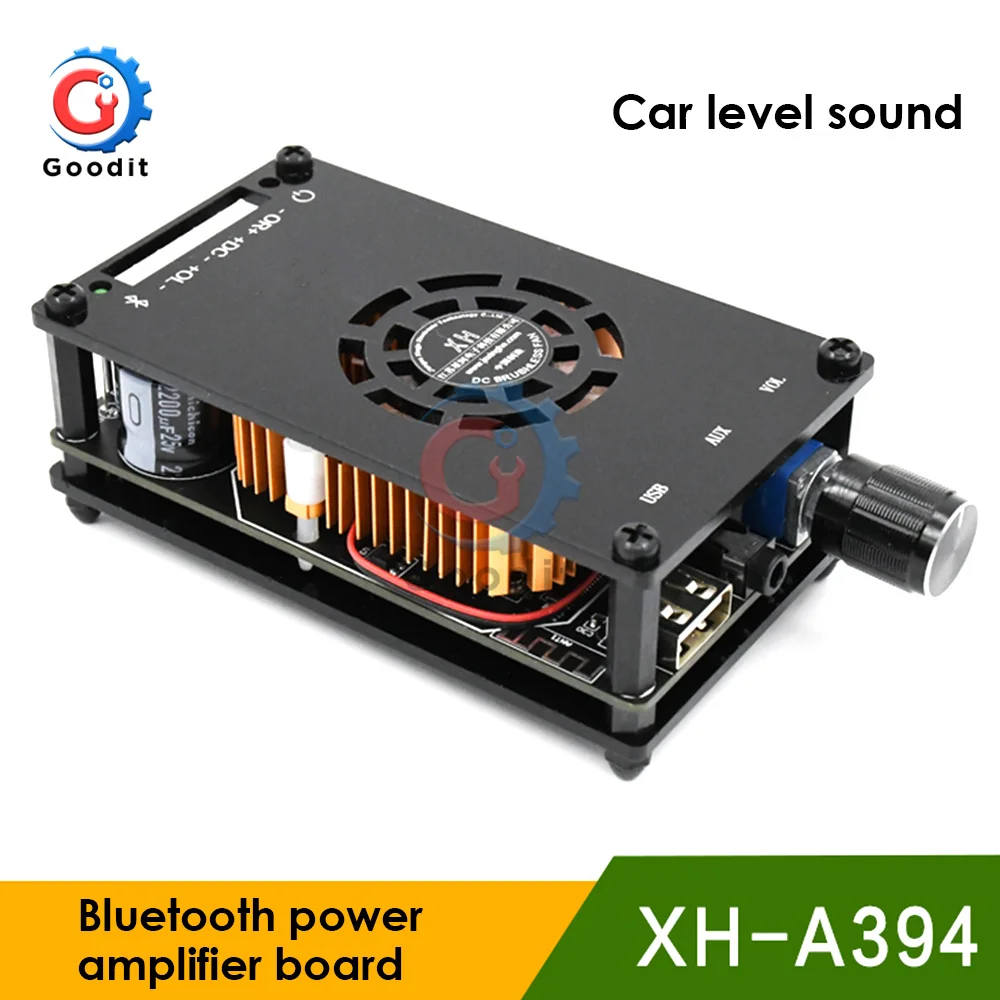
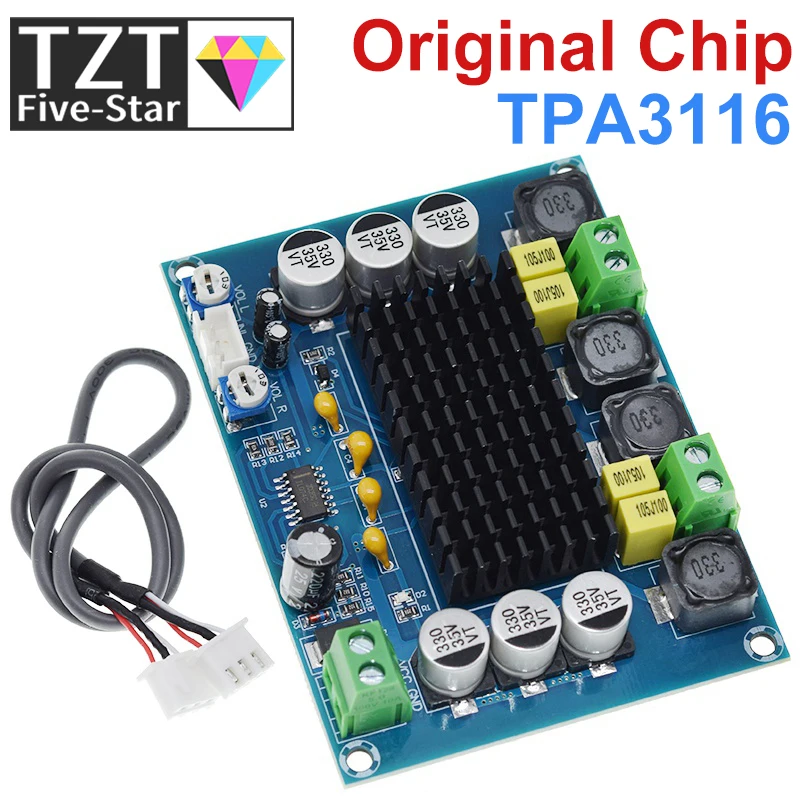
I built my stereo box a while ago and I'm at my 4th or 5th amp. A few of them just ended up dying on one channel or just overheating within a few minutes. A couple of them died due to my stupidity. I've always bought pretty much the same boards with the same chip except I ordered this one too but didn't know if it was appropriate. I know enough about electronics to know where the pixies go but not enough to know how they dance, if you catch my drift. I'm thinking as long as the output is below 50w per channel, any amp is probably safe but I'd rather be sure
It's a tda7388. The active cooling makes me think it likely runs hot and I'm gonna have temp issues but I'll report back if this thing is any better than the TPA3116s I've had. I'm guessing I won't see any difference between AB VS D class but who knows.
I have tried 4 amplifier of this type 2 bought on aliexpress and other two bought from amazon:
The amplifier came from aliexpress they failed both 2 in one channel. They had one channel broken both.
The amplifiers came from amazon they both fails in both channels.
Anyway the one channel configuration was really nice and it worked well.
I plan to try to buy others amplifier on aliexpress (they costs 4$) and i hope to get at least one good
Do you have any reliable source of these amplifiers?
In order to replace the dual channel amplifier as I written before, I've tried another amplifier this time MONO. The idea is put two mono amplifier in one box. Ive chosen this amplifier below because its output sould be around 120w and the voltage power is 12v-24v. I bought it from ebay. This amplifier did not worked as i explain below:
TDA2050 Amplifier Board - Input voltage: DC or AC 5V-24V powered by USB - Output power: 5W-120W - Output impedance: 4-16ohm
The amplifiers did not worked but not because they are broken but I think that using this amplifier is wrong. I've attached the amplifier to a speaker after the amplifier and before the transformer and i've analyzed the signal with oscilloscope and all signals in both channels was fine and the speaker worked well. But for some reason (in my opinion the voltage after the transformes was low -around 40v max- , is too low) when i tried on my skin it had no effect was percived
Do you have some ideas of why these amplifier seems does not work well?